













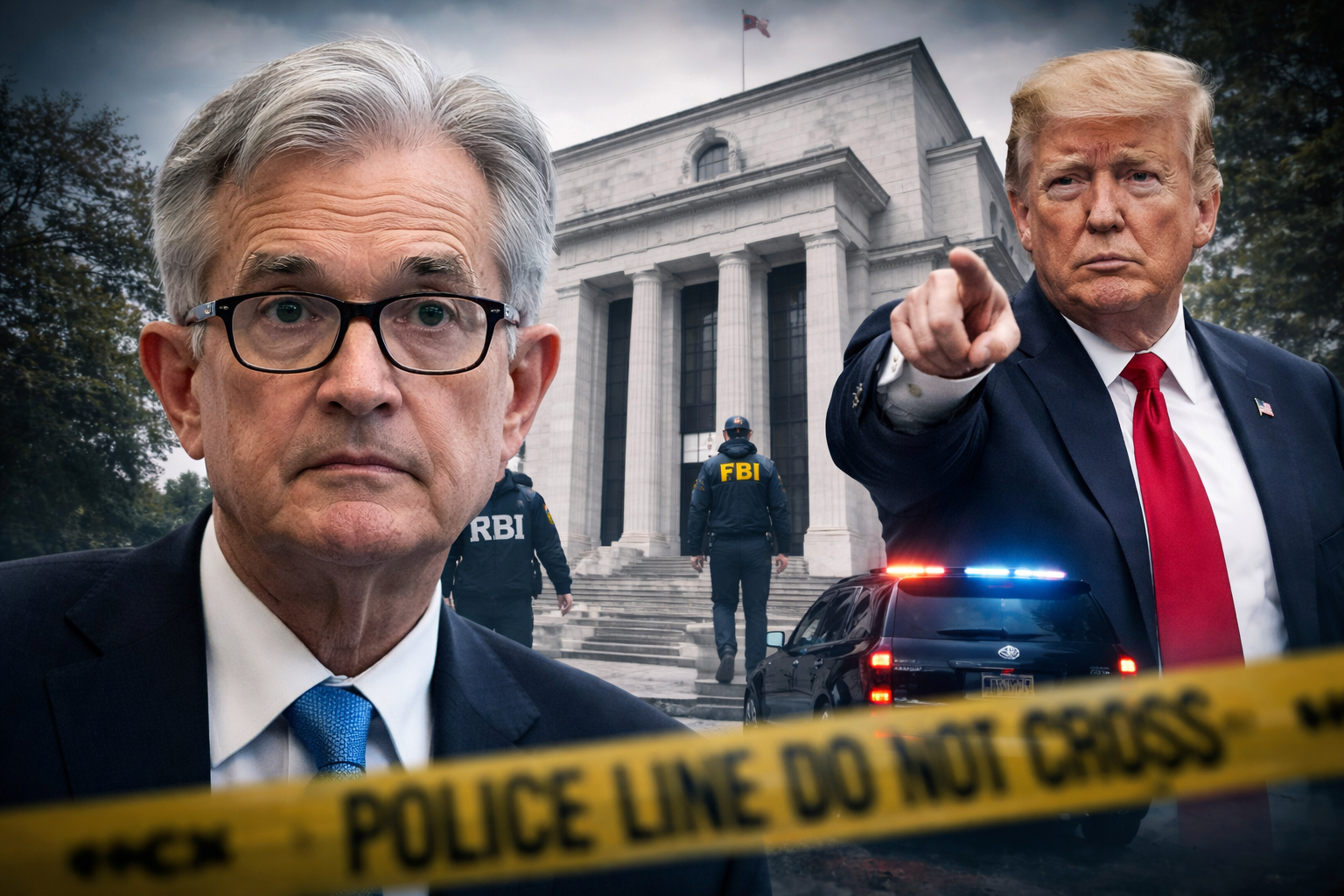
In a move without precedent in modern US history, the Justice Department has opened a criminal investigation into Federal Reserve Chair Jerome Powell over statements he made to Congress about the renovation of the central bank’s headquarters in Washington.
The inquiry represents a dramatic escalation of President Donald Trump’s long-running campaign against Powell, transforming public attacks and threats into formal legal action.
In a statement released late Sunday, Powell said he respected the rule of law and accountability in a democratic system, but argued that the investigation could not be viewed in isolation.
“No one—certainly not the chair of the Federal Reserve—is above the law. But this unprecedented action should be seen in the broader context of the administration’s threats and ongoing pressure.”
Powell, who has typically avoided public confrontation with Trump despite years of criticism, framed the investigation as politically motivated retaliation for the Fed’s refusal to cut interest rates as aggressively as the president has demanded.
Video message from Federal Reserve Chair Jerome H. Powell: federalreserve.gov/newsevents/spe…
View replies
7.2K
Reply
Copy link
Powell says renovation issue is a pretext
In a video message accompanying his statement, Powell rejected suggestions that the investigation stemmed from misleading testimony or a lack of transparency over the renovation project.
He said Congress had been kept informed through testimony and public disclosures, and described the focus on building upgrades as a pretext.
“This new threat is not about my testimony last June or about the renovation of the Federal Reserve buildings,” Powell said.
The threat of criminal charges is a consequence of the Federal Reserve setting interest rates based on our best assessment of what will serve the public, rather than following the preferences of the president.
Asked about the inquiry, Trump told NBC News that he had no knowledge of the US attorney’s investigation.
He nonetheless criticised Powell’s performance, saying, “He’s certainly not very good at the Fed, and he’s not very good at building buildings.”
Trump denied that the subpoenas had anything to do with monetary policy.
“I wouldn’t even think of doing it that way,” he said. “What should pressure him is the fact that rates are far too high.”
Markets react as investors weigh independence risks
Financial markets reacted swiftly to Powell’s remarks.
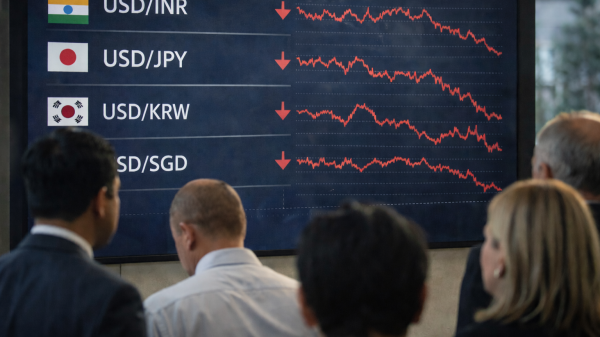
The dollar weakened, Wall Street futures slipped, and gold prices rose on Monday, reflecting investor unease about the implications for central bank independence.
Andrew Lilley, chief rates strategist at Sydney-based investment bank Barrenjoey, said the episode highlighted the limits of presidential influence over monetary policy.
“Trump is pulling at the loose threads of central bank independence,” he said.
“Investors won’t be happy about it, but it shows Trump has no other levers to pull. The cash rate will stay what the majority of the FOMC wants them to be.”
Trump-Powell: A fraught relationship dating back to 2018
The confrontation is the latest chapter in a fraught relationship that began almost as soon as Trump appointed Powell to succeed Janet Yellen as Fed chair in February 2018.
Despite being a registered Republican and Trump’s own pick, Powell quickly became a target after the Fed raised interest rates.
Powell oversaw four rate hikes in his first year, continuing the policy normalisation begun under Yellen in 2015.
By the end of 2018, the federal funds rate stood at 2.25% to 2.50%, its highest level in a decade.
By mid-2019, Trump’s patience had worn thin. As trade tensions with China intensified, he complained that higher rates strengthened the dollar and hurt US exporters.
“We don’t have that advantage because we have a Fed that doesn’t lower interest rates,” Trump said on CNBC in June 2019.
Later that year, as growth softened, the Fed reversed course and cut rates three times.
Trump nonetheless continued to berate Powell, at times calling Fed officials “boneheads” and mocking the chair personally.
Those criticisms have escalated during Trump’s second term, as he has repeatedly pressed the central bank to slash rates for months, even after it delivered three straight quarter-point cuts starting in September.
Trump escalated from name-calling to directly pressuring Powell, whose term concludes in May 2026, to either cut interest rates or step down.
How renovation costs became a political flashpoint
The renovation of the Fed’s headquarters emerged as a new line of attack last year, when Trump suggested the project could justify Powell’s removal.
He criticised the estimated $2.5 billion cost and accused the Fed of extravagance.
“I think he’s terrible… But the one thing I didn’t see him as a guy that needed a palace to live in,” Trump told reporters last year.
“But the one thing I would have never guessed is that he would be spending two and a half billion dollars to build a little extension onto the Fed.”
Trump, on Dec. 29, said the administration was thinking of bringing a suit against Powell for “incompetence” in connection with the renovation of Fed buildings.
“It’s going to end up costing more than $4 billion,” Trump said. “Highest price of construction per square foot in the history of the world.”
Trump also said that day that “I would love to fire him.”
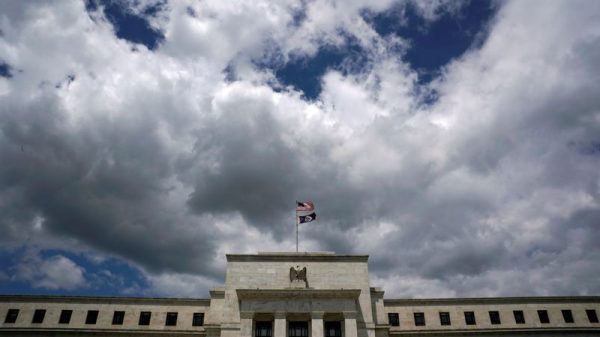
The renovation, which began in 2022 and is due to finish in 2027, involves the Marriner S. Eccles Building and a neighbouring structure dating back to the 1930s.
Costs are now estimated to be around $700 million over budget.
The Fed has said the buildings had not been comprehensively renovated in nearly a century and required major upgrades, including asbestos and lead removal and compliance with disability access laws.
Powell told lawmakers in June that features described in earlier planning documents, such as private dining rooms, new marble finishes and special elevators, were no longer part of the plan.
“There’s no V.I.P. dining room; there’s no new marble,” Powell said, adding that some original marble would be reused where possible.
He said plans had evolved, and some initial features were scrapped.
Experts warn of damage to central banking norms and a threat to Fed independence
Peter Conti-Brown, a Fed historian at the University of Pennsylvania, described the investigation as a low point for both the presidency and the institution of central banking.
He said Congress had deliberately designed the Fed to operate independently of short-term political pressures.
“Because the Fed has rebuffed President Trump’s efforts to take it down, he is launching the full weight of American criminal law against its chair,” Conti-Brown said in comments reported by Reuters.
Economists and investors have warned that the episode risks undermining confidence in US monetary policy at a time of global economic uncertainty.
Goldman Sachs chief economist Jan Hatzius said the threat of criminal charges had reinforced concerns that the Fed’s independence was under pressure.
Speaking at a Goldman Sachs Global Strategy Conference, Hatzius said the investigation had heightened fears that political interference could intensify.
He added, however, that he expected Powell to continue to base decisions on economic data.
“I have no doubt that he, in his remaining term as chair, is going to make decisions based on the economic data and not be influenced one way or the other,” Hatzius said.
Can an investigation lead to an indictment so easily?
Opening an investigation is one thing; assembling enough evidence to win an indictment from a federal grand jury — and to sustain it — is quite another.
In recent months, indictments against two prominent figures targeted by Trump, former FBI director James B. Comey and New York attorney general Letitia James, were dismissed by a federal judge in November.
A separate investigation into Senator Adam B. Schiff of California has so far failed to produce sufficient evidence to be brought before a grand jury.
Congress, meanwhile, has vested the Federal Reserve with the authority to set interest rates independently of presidential interference, recognising that elected leaders’ political fortunes are often closely tied to economic conditions.
Options before Powell after he steps down as chair in May
Powell’s term as Fed chair expires in May, but his term as a governor runs until January 2028.
He has not said whether he intends to remain on the board.
Most past chairs have stepped down entirely after leaving the top job, but analysts say Powell could choose to stay, limiting Trump’s ability to reshape the board.
Brian Jacobsen, chief economic strategist at Annexe Wealth Management, said such a move would be unconventional but possible.
If Powell resigned as a governor, Trump would gain an immediate vacancy to fill.
If he stayed, the president’s options would be more limited.
Atakan Bakiskan, a US economist at Berenberg, said the decision could significantly affect the Fed’s future stance.
He noted that unless another governor stepped down, potential successors such as Kevin Warsh or Kevin Hassett would need a vacancy to join the board before becoming chair.
Trump told The New York Times last week that he had already decided who he wants to replace Powell and is expected to announce his choice soon.
Hassett, Trump’s top economic adviser, is widely seen as a front-runner.
The post Trump tightens pressure on Powell? Investigation raises independence fears appeared first on Invezz