



















Global markets opened the week under pressure as investors reacted to escalating political tensions in the United States, fresh uncertainty over central bank independence, and a series of geopolitical and political developments spanning Asia and Europe.
Moves in currencies, equities, and commodities reflected growing unease, while attention also turned to Japan’s domestic politics and renewed US-Denmark tensions over Greenland.
Global markets react to Fed tensions
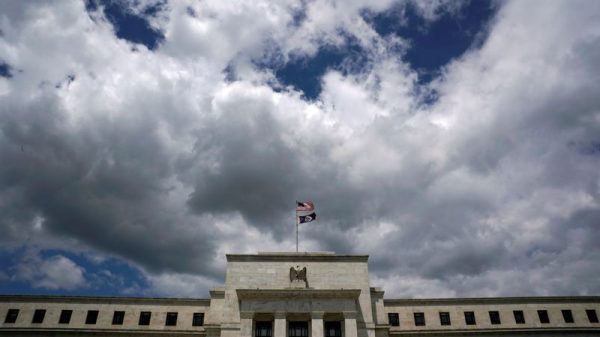
The US dollar weakened and equity futures slipped on Monday after Federal Reserve Chair Jerome Powell said the Trump administration had threatened him with a criminal indictment.
S&P 500 futures fell 0.6%, while the dollar index dropped 0.3%, on track for its biggest one-day decline since mid-December.
Safe-haven assets rallied sharply.
Gold surged to a fresh record high above $4,600 an ounce, supported both by concerns over US institutional stability and by geopolitical tensions linked to unrest in Iran.
The Swiss franc strengthened 0.4% to 0.7979 per dollar, while the euro rose 0.17% to $1.1656.
Traders said the developments were unsettling, though the immediate implications for interest rate policy remained unclear.
Fed funds futures are priced at roughly three basis points more in rate cuts for the year.
“This open warfare between the Fed and the US administration … it’s clearly not a good look for the US dollar,” said National Australia Bank’s head of currency strategy, Ray Attrill, in a Reuters report.
Oil prices held onto recent gains amid Middle East risks, with Brent crude easing about 40 cents to $62.90 a barrel.
European stock futures edged lower, while Asian equities rose, led by technology stocks, after US labour data suggested employment growth was slowing but not collapsing.
MSCI Asia Pacific ex Japan index was up 0.4%.
Japanese markets were closed for a holiday.
US probe into Jerome Powell escalates
The market reaction followed Powell’s statement on Sunday that federal prosecutors had served the Federal Reserve with grand jury subpoenas linked to his June testimony before the Senate Banking Committee about a $2.5 billion renovation of the Fed’s headquarters.
“This is about whether the Fed will be able to continue to set interest rates based on evidence and economic conditions — or whether instead monetary policy will be directed by political pressure or intimidation,” Powell said.
He described the investigation as a “pretext” and said it reflected broader pressure from the White House to force faster and deeper interest rate cuts.
Powell has denied accusations that he misled Congress, saying the Fed “made every effort to keep Congress informed.”
President Donald Trump said he had no knowledge of the probe, telling NBC News it had nothing to do with interest rates, but again criticised Powell’s performance.
The investigation is being overseen by the US Attorney’s Office for the District of Columbia.
Lawmakers from both parties warned the probe could undermine the Fed’s independence, while markets responded with falling futures, a weaker dollar, and higher gold prices.
Japan moves toward early election
In Asia, Japan’s ruling Liberal Democratic Party is preparing to dissolve the Lower House later this month and call a snap election likely in February, according to public broadcaster NHK.
The move would come just four months into Prime Minister Sanae Takaichi’s term and appears aimed at capitalising on her strong public support.
Takaichi’s approval rating stands at 75%, according to a Nikkei survey, marking the third straight month above 70%.
The LDP and its junior coalition partner, the Japan Innovation Party, hold a slim majority in the 465-seat Lower House, though they remain in the minority in the Upper House.
The political backdrop is complicated by economic headwinds.
Japan’s yen slid to a one-year low of 158.19 per dollar, inflation has exceeded the Bank of Japan’s target for 44 consecutive months, and revised data showed the economy contracted more than initially estimated in the third quarter.
US and Denmark to discuss Greenland
Separately, US officials are set to meet Danish counterparts this week to discuss Greenland, according to diplomatic sources cited by CBS News.
The talks follow renewed comments from Trump suggesting the US could acquire the territory, including by force if necessary.
“If we don’t take Greenland, Russia or China will take Greenland, and I am not going to let that happen,” Trump said on Sunday.
Danish officials have pushed back strongly, with Greenland’s leaders reiterating they do not want to become part of the US.
The rhetoric has further strained relations with European allies and raised questions about Washington’s commitment to NATO, adding another layer of geopolitical risk for global markets already grappling with uncertainty.
The post Morning brief: Markets slide on Powell probe, Japan prepares for snap election appeared first on Invezz