





















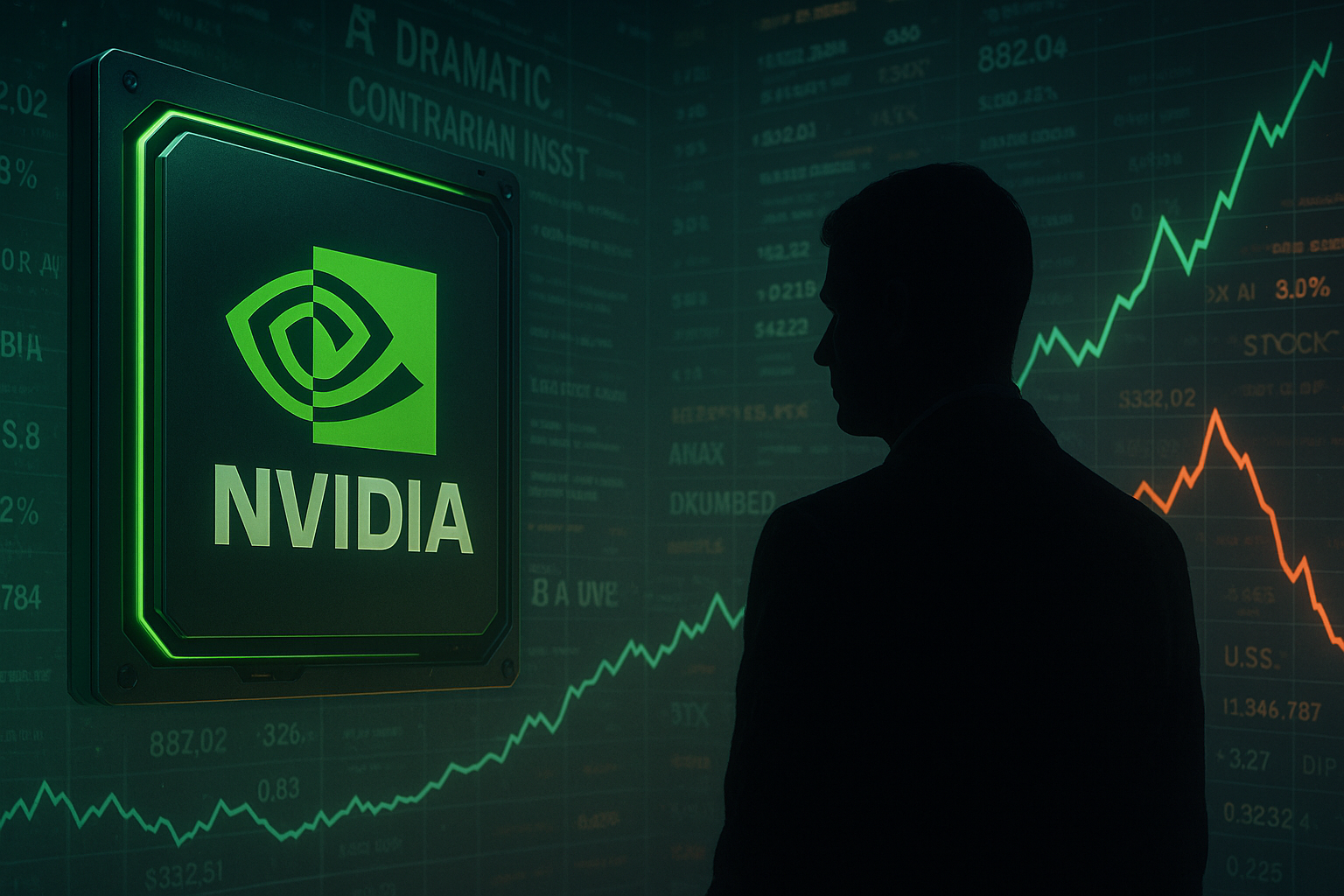
Nvidia stock (NASDAQ: NVDA) climbed on Wednesday after Reuters reported that the semiconductor giant has asked Taiwan Semiconductor Manufacturing to ramp up production of its H200 artificial intelligence chips to fulfill massive pre-orders from Chinese tech companies.
Chinese firms have placed orders for more than 2 million H200 units for 2026 delivery, while Nvidia currently holds just 700,000 units in inventory.
This marks a significant supply gap that validates years of pent-up demand from the world’s second-largest AI market.
The production ramp represents one of the most concrete catalysts for AI chip demand in months, potentially reshaping revenue guidance and margin expectations for 2026.
The move matters because it converts speculation about China’s AI demand into tangible supply orders.
With the Trump administration recently allowing H200 exports to China, Nvidia is positioned to capture a market that has been largely inaccessible due to US export restrictions.
The TSMC production ramp signals serious revenue visibility rather than wishful thinking.
Production is expected to begin in Q2 2026, meaning substantial shipments could materialise in the second half of the year.
Analysts interpret the ramp as a bullish signal for 2026 AI infrastructure spending, lifting optimism around Nvidia’s data-center segment and its competitive moat against rivals like AMD.
Nvidia stock: Converting supply constraints into revenue opportunity
The H200 is Nvidia’s prior-generation Hopper architecture chip, produced using TSMC’s 4-nanometer process.
While newer than the export-restricted H20 variant (which delivered only one-sixth the performance), the H200 remains extremely attractive to Chinese cloud providers and tech giants, including Alibaba and ByteDance.
These companies view the H200 as a critical tool for developing competitive large-language models and AI applications, making it worth premium prices even with limited availability.
The numbers paint a stark picture of demand intensity.
Chinese tech firms have ordered 2.05 million H200 chips against Nvidia’s 700,000-unit inventory, a 3-to-1 demand-to-supply ratio.
Pricing reportedly sits around $27,000 per chip, representing a 15% discount to grey-market alternatives currently trading above 1.75 million yuan per eight-chip module.
Nvidia plans to fulfill initial orders from existing stock, with the first shipments expected before the Lunar New Year in mid-February.
The scale of Chinese demand is so substantial that Nvidia has explicitly asked TSMC to queue additional production capacity specifically to meet this opportunity, signaling management’s conviction that the opportunity is real and sustainable.
This production ramp occurs even as Nvidia prioritises its newer Blackwell architecture and next-generation Rubin chips.
The fact that management is dividing TSMC’s precious 4-nanometer capacity between legacy H200 production and cutting-edge next-gen products underscores the economic urgency of Chinese demand and Nvidia’s confidence in revenue visibility for 2026.
Key risks investors must watch
Nvidia shares rose approximately 1% on the morning news, with the stock trading near $188 to $192 per share.
Analysts broadly interpreted the production ramp as positive, noting that incremental H200 revenue flowing into 2026 would lift consensus estimates and support valuation multiples.
The average analyst price target stands at $256, implying 37% upside from current levels.
However, investors must monitor several risks before assuming the rally is a sure thing. First, Beijing has not yet approved H200 imports into China, despite Trump’s export authorisation.
Chinese officials held emergency meetings in December and launched a government procurement list on December 10 that notably excluded foreign suppliers, suggesting ongoing hesitation.
Second, geopolitical risk remains elevated. Policy reversals or additional US export controls could disrupt the deal overnight.
Third, TSMC’s capacity constraints are real; adding H200 production could limit the availability of newer Blackwell chips for other customers, potentially creating supply bottlenecks elsewhere.
The post Nvidia stock soars on Wednesday: here’s what is pushing NVDA’s latest rally appeared first on Invezz